Kayah (Karenni) State, Myanmar

Singing and playing traditional Kayan welcome song when I visited her home outside of Loikaw. ©Steven Wade Adams
The Karenni People
On my last visit to Myanmar in July 2019 I traveled to Kayah State in the eastern part of the country. Kayah is Myanmars smallest state, located in the eastern highlands along the Thai border. It is historically known as Karenni State, and the people here have never fully accepted outside rule. Under the British, this territory was never formally incorporated into colonial Burma and the people have struggled for independence through every era of government since.
I was able to visit during a brief period of relative peace in the area around Loikaw, the state capital. The region is home to several distinct ethnic groups and tribes under the broader Karenni identity, including the Kayan Lahwi, the Kayah, the Kayaw, and the Lisu. Each has its own language, dress and customs. The diversity concentrated in such a small area is immense. During my visit I met government employees who were working to formally catalog the various tribes, their customs, clothing, and languages. Whatever the government’s intentions, the effort spoke to the sheer scale of diversity that exists there.
Near Loikaw there were also small cultural centers that had been set up to educate outsiders about the dress, music, and customs of the local groups. It was a very early local effort at cultural tourism, a nascent industry that did not survive the pandemic or the coup that soon followed. While it lasted, it was fascinating and the opportunity to highlight traditional culture a source of great pride for the local people.
The Kayan Lahwi
The first person I met in a Kayan village outside Loikaw was a woman who greeted me with a traditional welcome song, playing guitar and singing from her doorway. Her voice became the soundtrack for a slideshow I later made from this visit.
The Kayan Lahwi are probably the most recognizable of Myanmar’s ethnic groups. The women wear heavy brass coils around their necks beginning around age five, creating the appearance of elongated necks. Contrary to popular belief, the neck will not collapse if the rings are removed. The women I met wore them without any apparent self-consciousness. When I asked what it was like to live with them, the response was essentially that this is just what you do. It is part of being Kayan. Still, the rings are far from comfortable. The women I photographed showed chronic bruising and sometimes open wounds where the brass rubs against the skin underneath.
One woman demonstrated how she sleeps, using a carved wooden “pillow” to hold the weight of the coils while she rests. I asked if she had ever removed the rings. She told me she had once had them taken off for surgery to remove a tumor on her neck. After the resulting wound healed, she had them replaced. Not only did the rings represent her identity, but she felt physically uncomfortable without them. The removal and the replacement must be performed by a specialist. The process takes hours and is technically demanding.

Kayan Lahwi woman at her home in Myanmar. ©Steven Wade Adams

Kayah woman demonstrates how she sleeps with her brass neck rings. ©Steven Wade Adams
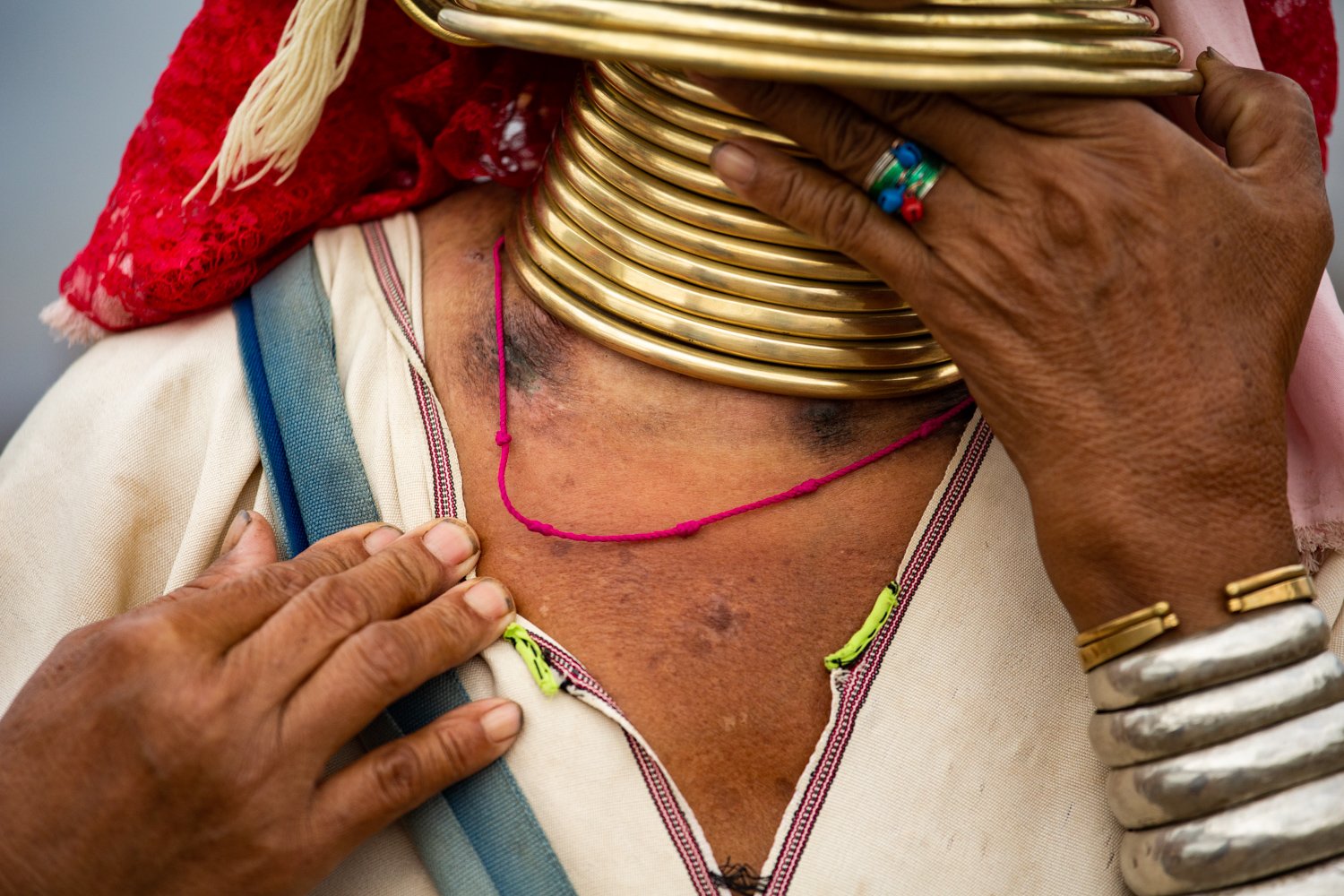
Skin bruising beneath brass neck coils on a Kayan Lahwi woman in Myanmar. ©Steven Wade Adams
In one remote village I met an 85-year-old Kayan woman who had come down from the mountains as a young girl to be married. Her husband was no longer living and she now shared her home with her children and grandchildren.

85 year-old matriarch who “came down from the mountains” as a young girl. ©Steven Wade Adams
Her 16-year-old granddaughter was also with her, and she had a very specific request. She wanted the portraits I had made of her so she could post them on Facebook to find a boyfriend. She was not wearing neck rings and had no interest in doing so, explaining they are not modern. The influence of the outside world is strong even in areas as remote as this one.
The Kayah People

Kayah woman in traditional clothing, Loikow, Myanmar ©Steven Wade Adams
The Kayah are the largest ethnic group in the state and the one for which it is named. What struck me about the Kayah was how visually distinct their traditional dress is from the Kayan, despite their living in close proximity. (The same is true of many other ethnic groups here as well). The Kayah women wear intricately woven textiles, colorful turbans, silver ear and wrist accessories, and lacquered leg rings. The lacquered rings are unique to the Kayah and totally different from the brass coils of the Kayan Lahwi. Similar to the Kayan, what a Kayah woman wears communicates her social status and cultural affiliation. Across the tribes of Kayah State, clothing differences are striking and immediate, even between villages that are not far apart.
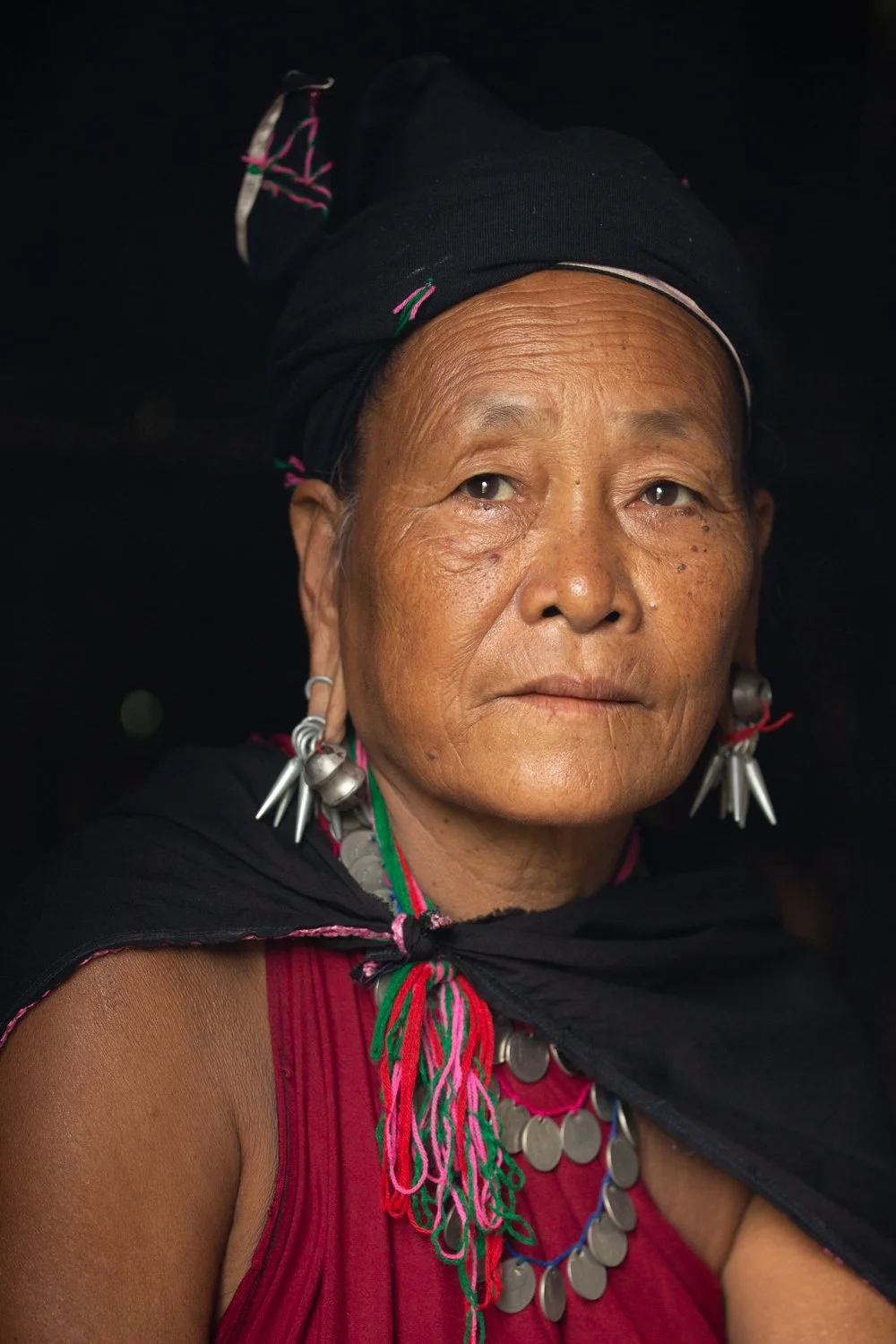
Portrait of Kayah woman near Loikow, Myanmar in traditional clothing and jewelry. ©Steven Wade Adams

Kayah woman with traditional instrument, Myanmar. ©Steven Wade Adams
Kayah Animism
The animist practices I witnessed were primarily among the Kayah. Animism attributes spiritual significance to natural elements, ancestral spirits, and other forces, and it has deep roots among the Karenni groups, sometimes practiced alongside Christianity or Buddhism.

Kayah animist ceremonial grounds, Kayah State, Myanmar. ©Steven Wade Adams

A Catholic Jubilee Monument erected in 2000. It references dates of 1858 and 1910, demonstrating the long history of catholicism in this area. ©Steven Wade Adams
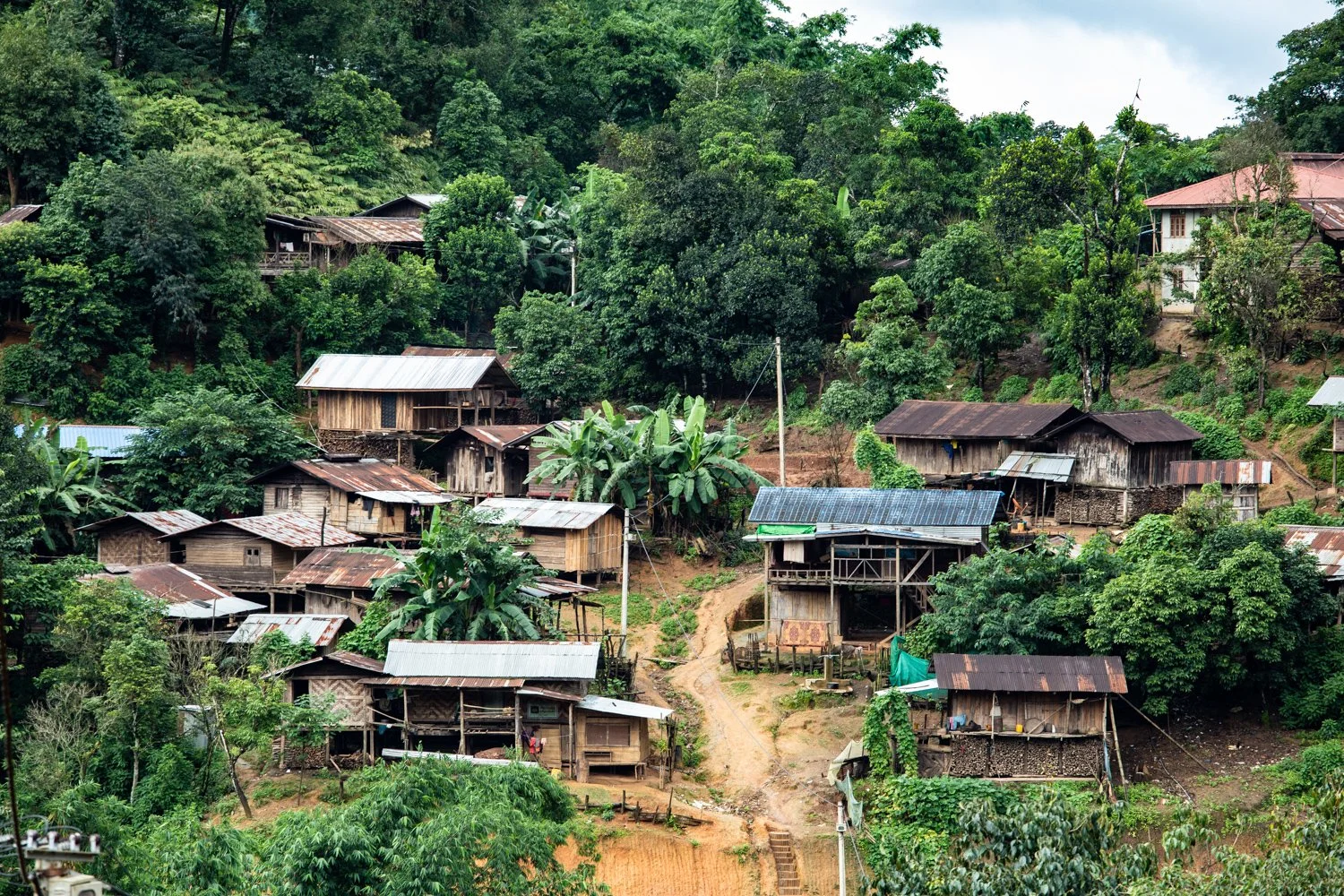
Remote Kayaw village in Kayah State, Myanmar. ©Steven Wade Adams
In the Kayah villages I visited, elaborate spirit poles marked the locations where rituals occur at certain annual cycles. Animal sacrifice remains a central practice, and chickens are routinely used as a means to obtain guidance from the spirits. Chicken bones are also prominently displayed on the outsides of homes to ward off evil spirits.
In one village we were shown animal skulls placed at or into trees from animals killed during hunting. This practice feeds the souls that guard the environment: the mountains, the forests, and the rivers. Spiritual practice and the physical landscape are not separate for the Kayah.
The Kayaw
The most remote group I visited was part of a Kayaw village near the end of Myanmar’s brief open period, most likely Htay Kho. The window for this area was even shorter than elsewhere in Kayah State, as the Kayaw had been engaged in ongoing conflict with the government.
Before we could enter the Kayaw area, we had to visit a local government office to obtain a special permit. The office was hot and humid, stacked high with papers and handwritten notebooks. I was the only foreigner in the room, there with my guide, and the officials seemed suspicious. The room was crowded with people who were curious but not particularly friendly.

Portrait of Kayaw woman with traditional clothing and jewelry. ©Steven Wade Adams
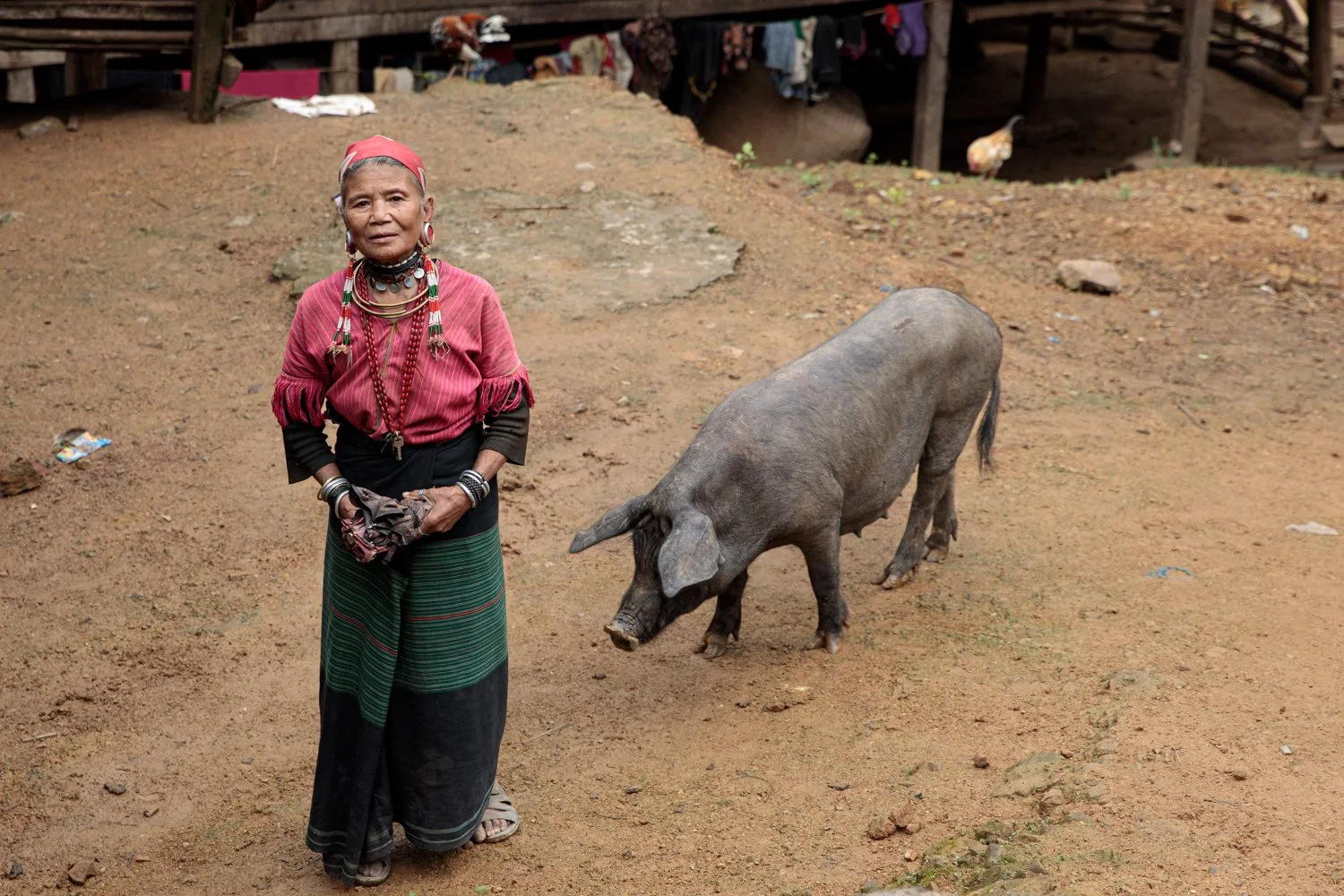
Resident of Htay Khoe village with her pig. ©Steven Wade Adams

Inside the home of a Kayaw woman with her baby and dog. Htay Khoe village, Myanmar. ©Steven Wade Adams
From there we passed through several armed checkpoints. The passage took us through areas of negotiated authority between the government and the ethnic armed organization. The arrangement, as I understood it, was that the government military could not go past those checkpoints, which were policed by local forces only.
The roads to the Kayaw villages were narrow and steep, with evidence of constant landslides from seismic activity. There were stories of people being buried while traversing these roads. It was harrowing. The remoteness is one reason the Kayaw were never conquered. Getting to them has always been difficult, and they have used that difficulty to their advantage.
Because of their isolation, the Kayaw had seen very few outsiders apart from missionaries who arrived decades earlier. The Kayaw adopted Christianity, and the evidence is visible: a Catholic church stands in the valley below the village, striking to see in Buddhist majority Myanmar. The Catholic church in Htay Kho is roughly a century old. Across the broader Karenni region, Catholic missionaries first arrived in the mid-1800s, and markers of their presence are still visible along the roads between villages. In a region where the people have never accepted Burmese authority, and where the central government is overwhelmingly Bamar and Buddhist, Christianity is part of how the Kayaw distinguish themselves from the state they have always resisted.
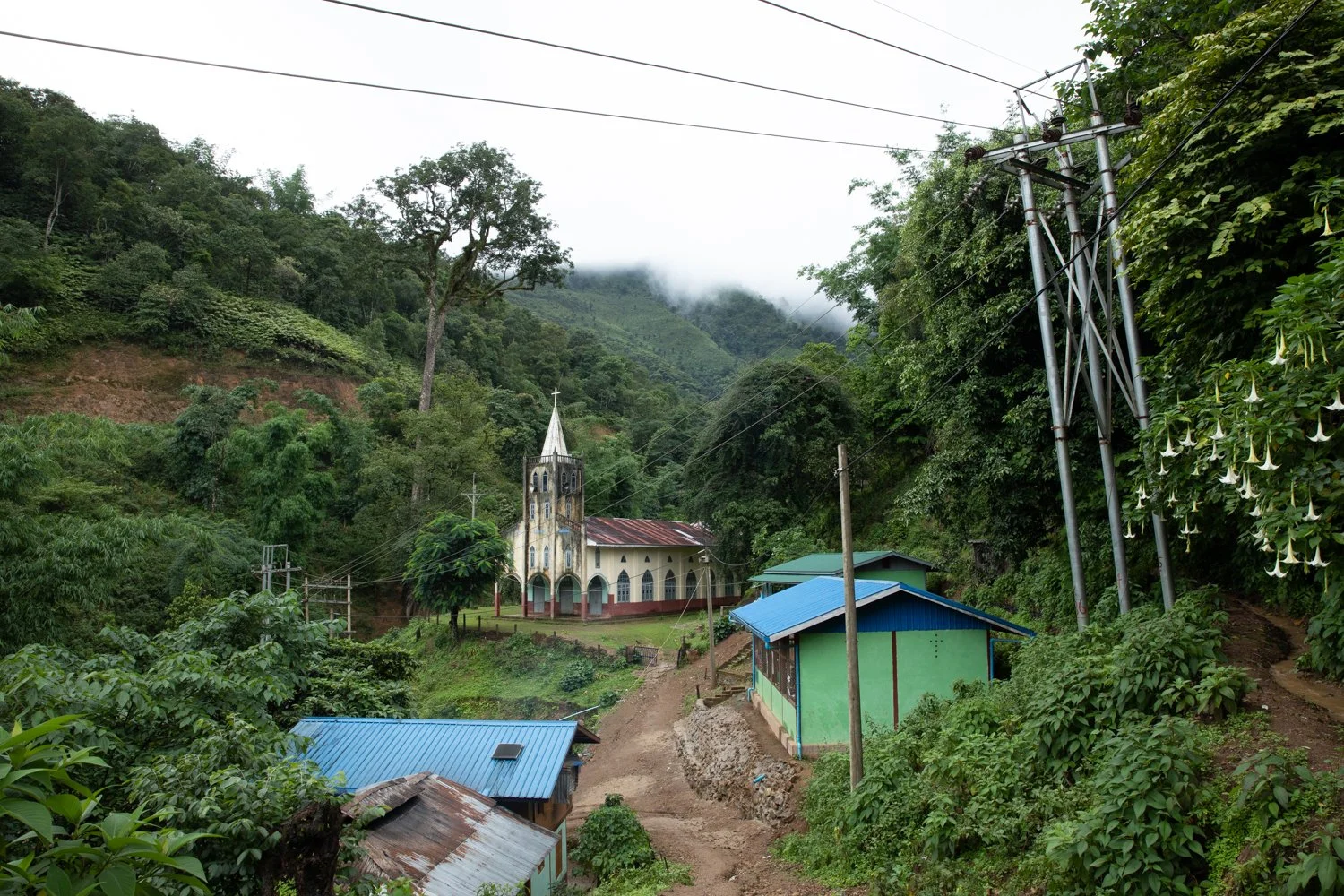
The Catholic Church has been in remote Htay Kho for more than a century. ©Steven Wade Adams
The Kayaw women’s traditional dress is distinct from the other groups: large circular earrings, brass leg rings, and elaborate necklaces made from shells, beads, coins, and metals.
The people I met were very friendly and seemed as interested in me as I was in them. They rarely receive outsiders. On the day I was there, I saw only one other outside visitor. The village was far from a tourist destination, even during the brief period when tourism to Kayah State was possible.
The Lisu
The Lisu are one of the smaller groups near Loikaw, though they are found across the region and in neighboring countries. When I arrived at the Lisu village, most people had left for the fields or school. The village was quiet. I was able to photograph several generations of friendly women and girls in their traditional clothing and headwear, but this was a brief visit to a place where the inhabitants were mostly elsewhere that day.
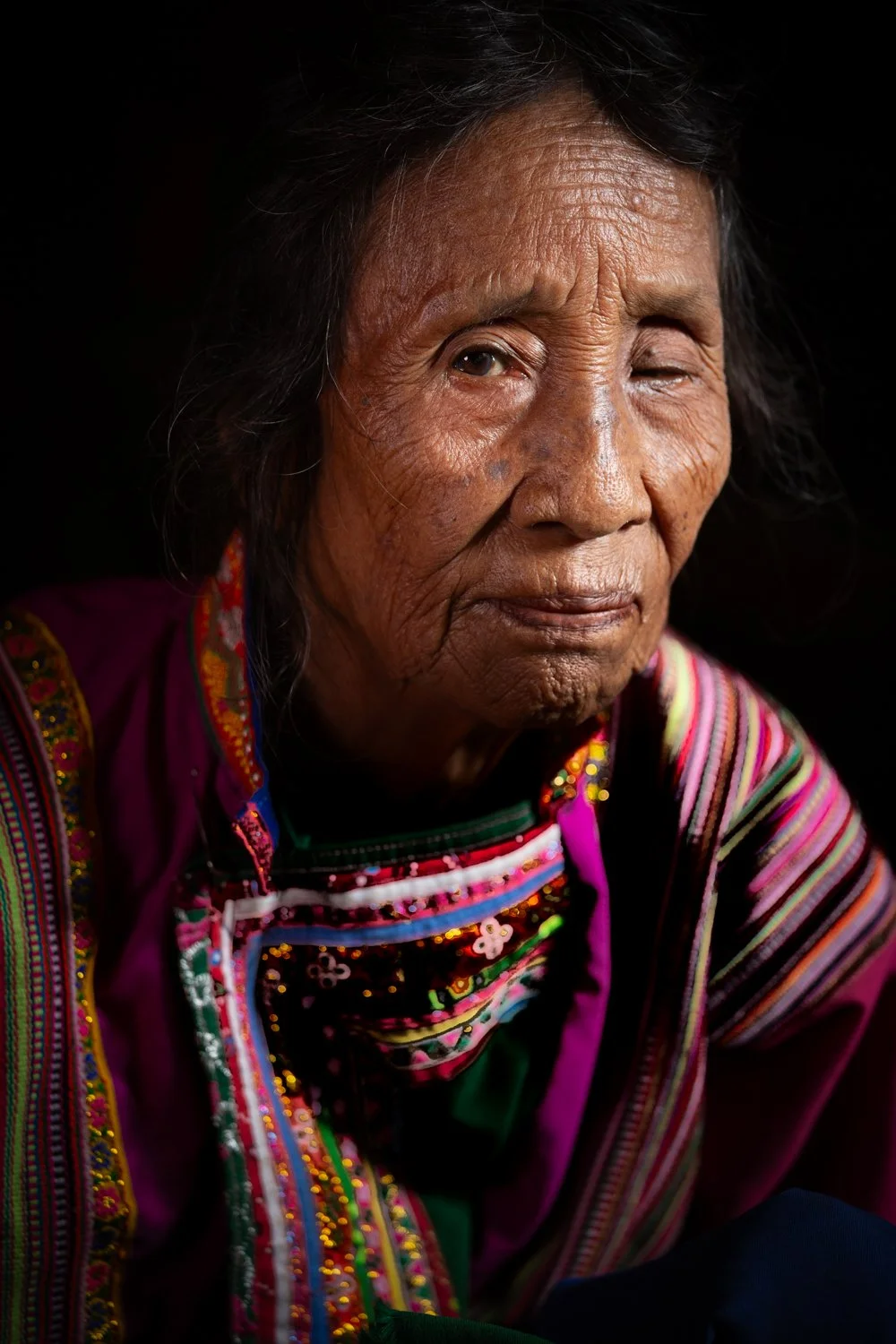
Portrait of Lisu elder, Kayah State, Myanmar ©Steven Wade Adams
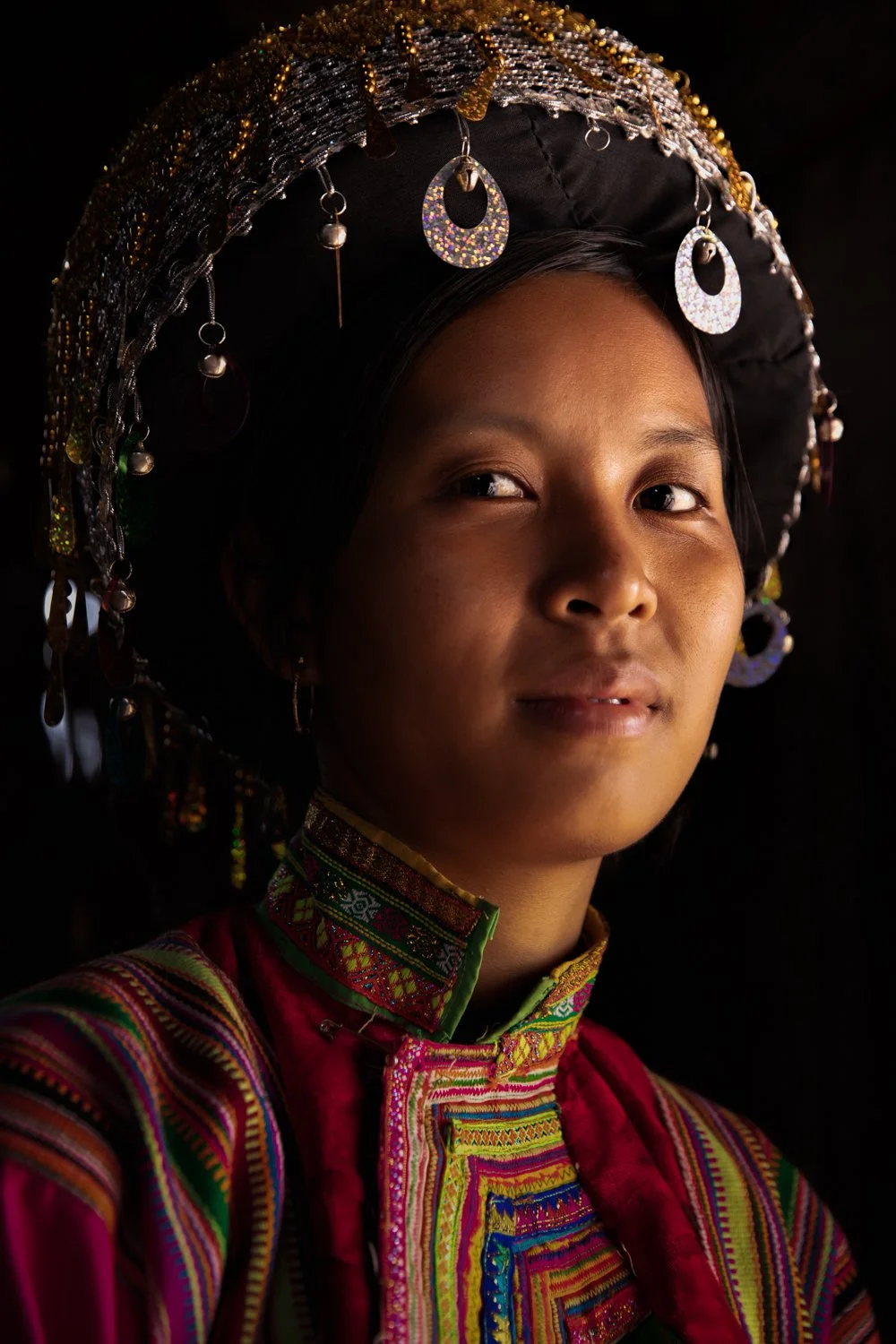
Portrait of Lisu woman, Kayah State, Myanmar ©Steven Wade Adams
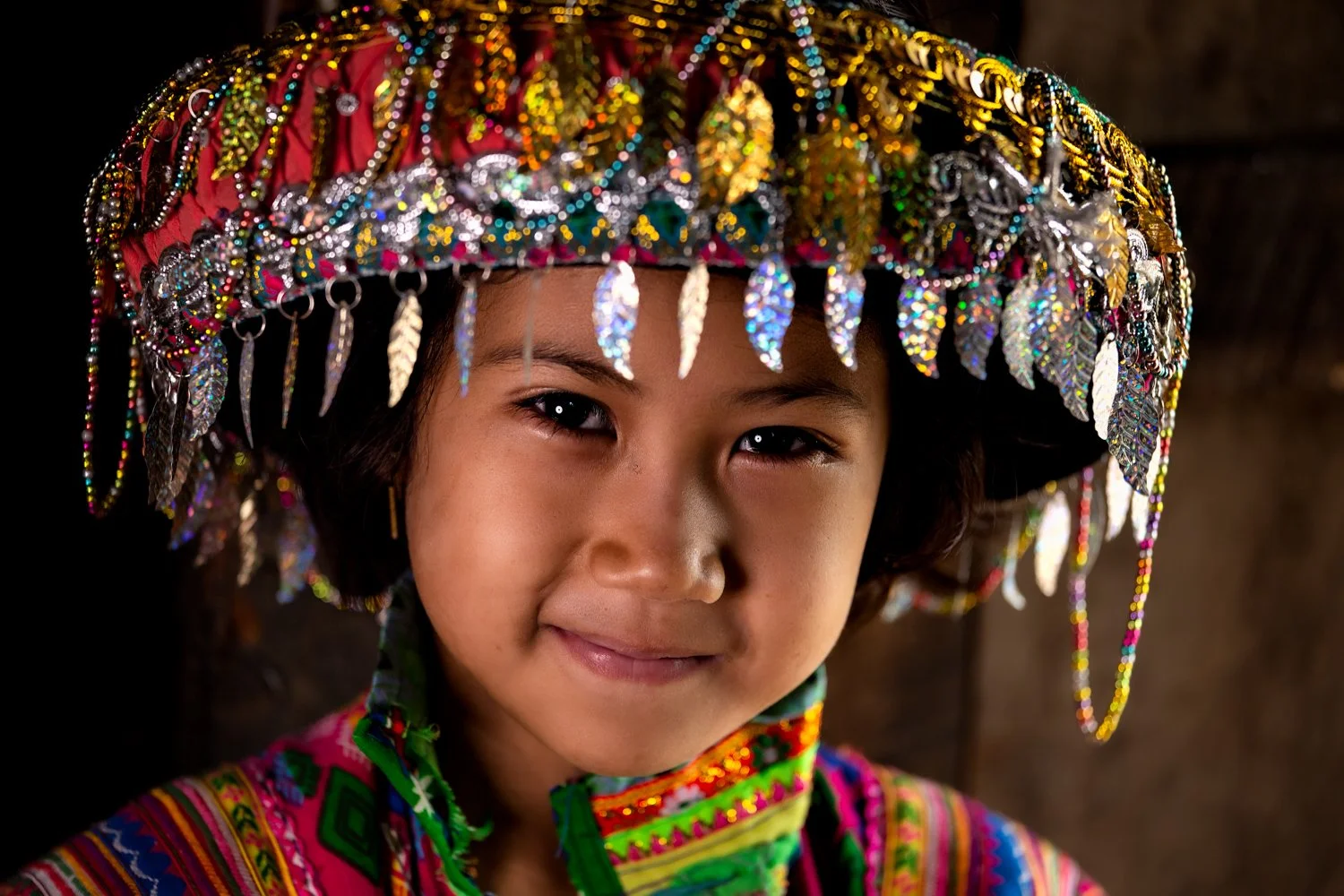
Portrait of Lisu girl, Kayah State, Myanmar ©Steven Wade Adams
After the Coup
I visited Myanmar at least seven times in the years between 2015-2019. This trip was my last.
In February 2021 the military junta staged a coup, dissolved the quasi-democratic government, deposed the elected leadership and imprisoned Nobel Peace Laureate Aung San Suu Kyi. In the years since, Kayah State has been one of the most active fronts of the civil war. Resistance groups including the Karenni Army, the Karenni Nationalities Defense Force, and the Karenni National People’s Liberation Front have fought sustained battles in and around Loikaw. Demoso, where I photographed young women planting rice in the shadow of the Silver Pagoda, became a zone of heavy fighting.

The “Silver Pagoda” near Demoso, Myanmar in 2019. Demoso has seen very heavy fighting following the military coup of 2021. ©Steven Wade Adams

Young women plant rice in the shadow of the “Silver Pagoda” near Demoso, Myanmar in 2019. Less than 2 years later, Demoso became a hot zone of heavy conflict and civil unrest. ©Steven Wade Adams
The memory of these people stays with me. I hope each of them is alive.