Climate Resilience & Adaptation

The job of fetching water often falls to women and young girls. Photograph: ©Steven Wade Adams, Bale Zone, Ethiopia 2017
Strategic Documentation of Climate Adaptation Programs
Climate resilience programs benefit from visual storytelling that can demonstrate community-led adaptation strategies. I partner with nonprofits and NGOs implementing programs in water security, sustainable land management, and climate adaptation initiatives across Sub-Saharan Africa.
This documentation supported fundraising campaigns, donor stewardship and reporting, and other communications that demonstrate measurable impact in vulnerable communities facing climate stress.
Representative partners include Global Communities, AfriScout, and Project Concern International (Ethiopia).
Field Experience Across Programs
Multi-country fieldwork has included documentation of water access programs in Ethiopia’s Bale Zone, regenerative grazing and satellite-enabled resource management in Kenya, and community-led environmental rehabilitation initiatives.
This work spans climate adaptation through sustainable agriculture, water infrastructure, ecosystem restoration, and technology-enabled land management. Each engagement begins with a clear understanding of communication objectives and program context, so that visual assets serve both immediate needs (donor reporting, advocacy) and long-term institutional storytelling that builds confidence in climate adaptation approaches.
Strategic Collaboration Process
Effective documentation of climate resilience programs depends on close collaboration with program teams, implementing partners, and communities adapting to climate impacts. Using my Humanitarian Photography Brief to document stratgy and needs, I work with organizations to further clarify their strategic objectives, identify key messages, and develop visual storytelling frameworks to best demonstrate program impact.
This collaborative approach results in imagery that reflects strategy and authentically represents community engagement and agency.

Young girl retrieving water for her household. Photograph: ©Steven Wade Adams, Ethiopia, 2017
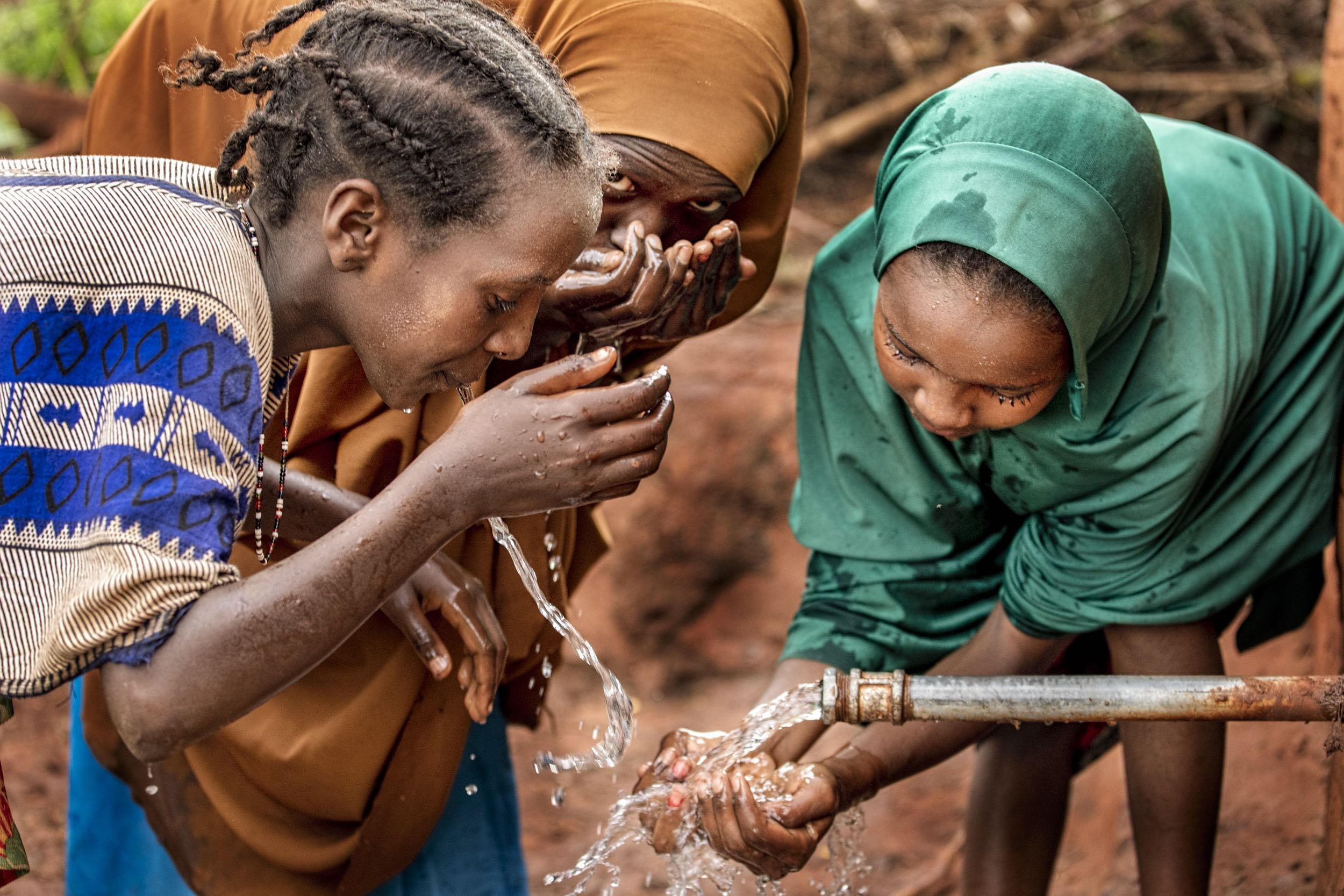
Young girls drink fresh water at a well constructed by PCI with support from USAID. Photograph: ©Steven Wade Adams, Bale Zone, Ethiopia, 2017

Project REVIVE supported a range of entrepeneural programs to diversity the local economy including farming vegetables. Photograph: ©Steven Wade Adams, Bale Zone, Ethiopia 2017
SELECT ASSIGNMENTS
PROJECT REVIVE

This woman has just returned to her traditional home after retrieving water several kilometers away. Photograph: ©Steven Wade Adams, Ethiopia 2017
Strategic partnership with PCI/PCI Ethiopia documenting USAID-funded resilience programming in Ethiopia's most vulnerable regions. REVIVE addressed climate and conflict challenges through integrated interventions: water access infrastructure, agricultural diversification, environmental rehabilitation, erosion prevention, and water retention. Field work documented clean water access programs, economic diversification initiatives including vegetable farming, community-led environmental restoration, and women's roles in resource management - supporting donor reporting and advocacy for expanded climate adaptation funding.
Beneficiaries: 620,000 people
Local Implementing Partners: Agri Service Ethiopia, Hundee Oromo Grassroots Development Initiative, Rift Valley Children and Women Development Organization
Visual storytelling supported Global Communities' communications demonstrating measurable outcomes in climate resilience, food security, and community self-reliance in conflict-affected regions.
AFRISCOUT
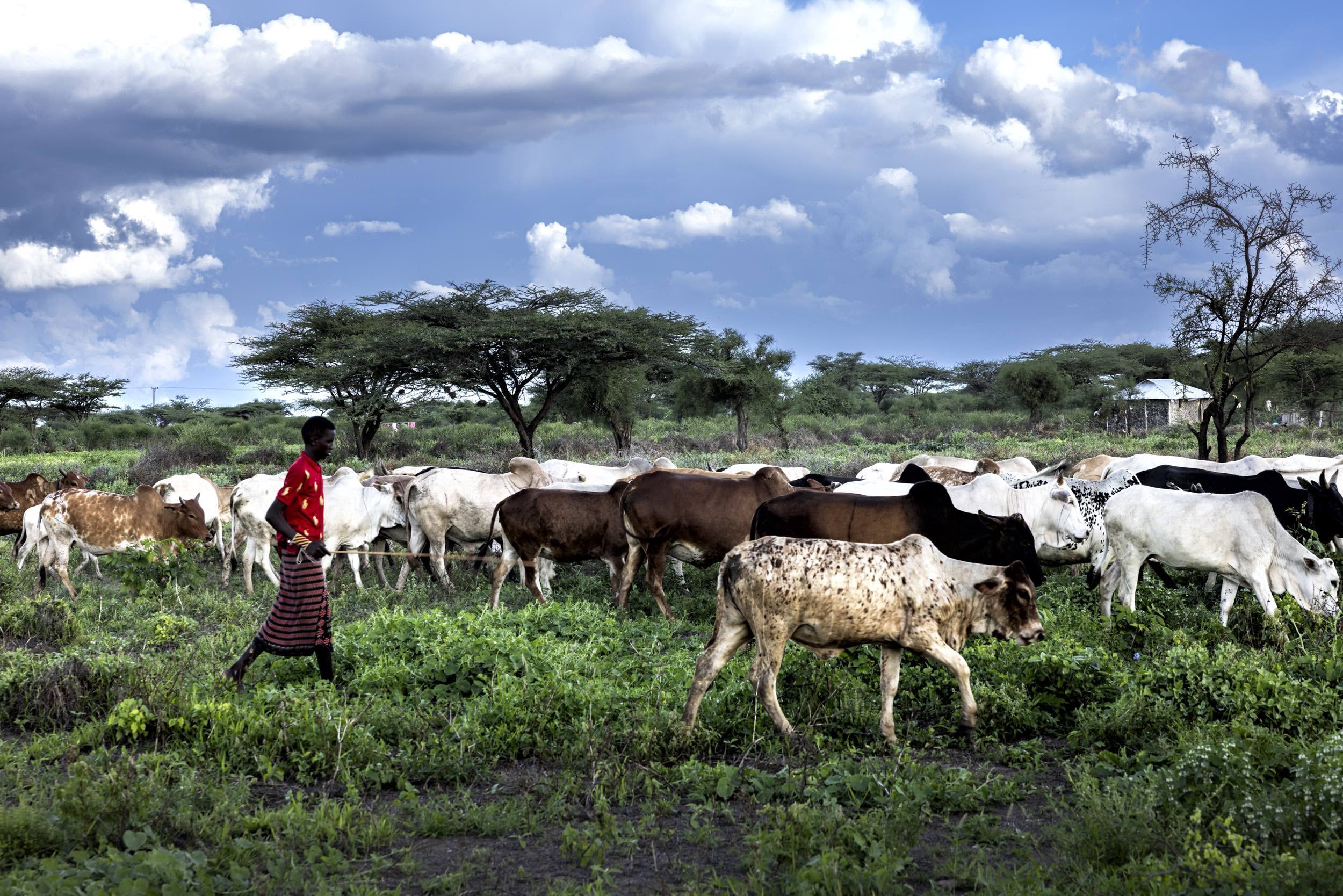
A Borana herdsman brings his cattle into camp for the night so they can be protected from wildlife and raiders. Photograph: ©Steven Wade Adams, Kenya 2024.
Strategic documentation of innovative technology supporting pastoralist communities' climate adaptation across Sub-Saharan Africa. This assignment with Global Communities documented AfriScout implementation among Borana and Samburu communities in northern Kenya—supporting organizational communications for broader climate resilience and sustainable land management strategy.
AfriScout is a transformative satellite-enabled smartphone application providing real-time data on grazing land availability, water sources, and vegetation cover. The technology enables pastoralists to make informed migration decisions, reducing the need for trial-and-error journeys across barren and unproductive areas that can result in devastating livestock losses and, in extreme cases, human lives. The user-friendly interface delivers up-to-date information about vegetation cover, water sources, and potential grazing sites—allowing pastoralists to plan efficiently and avoid areas prone to overgrazing or resource depletion. This enhances community resilience by enabling collective decision-making and resource-sharing based on accurate, shared data.
Beyond immediate benefits to pastoralists, AfriScout promotes sustainable land management. By enabling efficient grazing practices, it helps prevent land degradation, supports regeneration of natural ecosystems, and mitigates climate impacts on vulnerable communities.
This innovative solution has been widely recognized for its potential to revolutionize resource management and has become a cornerstone of Global Communities' broader vision for climate resilience and land restoration across Africa.
Field documentation captured technology adoption in practice, community decision-making processes, resource management outcomes, and the intersection of traditional pastoral knowledge with data-driven innovation—supporting donor reporting, advocacy for technology-enabled adaptation approaches, and communications demonstrating measurable resilience outcomes.